
How to Check Tire Pressure
- rogorsmotors
- Blog
- April 23, 2024
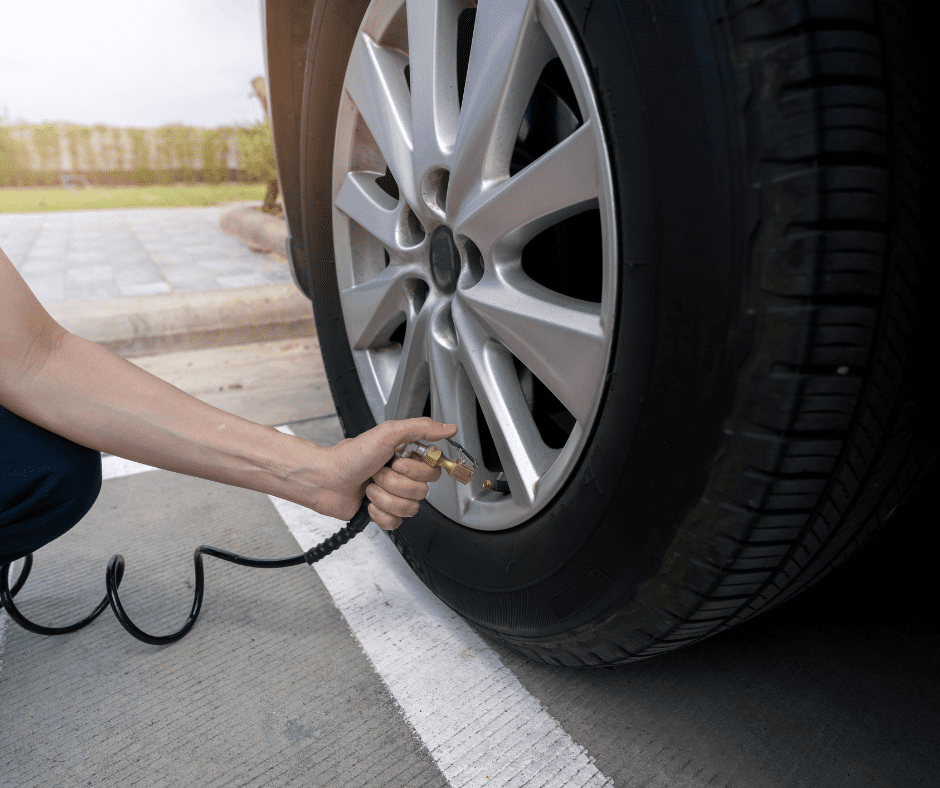
How to Check Tire Pressure
Maintaining proper tire pressure is one of the simplest yet most important aspects of vehicle maintenance. Properly inflated tires improve fuel efficiency, extend tire life, and—most importantly—keep you safe on the road. In this guide, we’ll walk you through how to check and adjust your tire pressure.
Why Tire Pressure Matters
Safety: Underinflated tires can overheat, leading to tire failure and blowouts. Overinflated tires can cause poor handling and make your ride harsh.
Fuel Economy: The U.S. Department of Energy estimates that for every 1 PSI drop in pressure for all four tires, gas mileage is lowered by 0.1%. Keeping your tires properly inflated can improve your gas mileage by up to 3%.
Tire Life: Improperly inflated tires wear unevenly and wear out faster, costing you more money in the long run.
What You’ll Need
A tire pressure gauge (digital or stick-type) and access to an air compressor. Most gas stations have an air compressor available for public use.
Step-by-Step: How to Check Tire Pressure
Step 1: Find the Correct Pressure for Your Tires
The correct tire pressure for your vehicle is listed in your owner’s manual or on a sticker inside the driver’s door jamb. Note that this is the recommended pressure for your car, not the maximum pressure printed on the tire sidewall.
Step 2: Check the Pressure When Tires Are Cold
Check tire pressure when the tires are “cold”—before you’ve driven more than a mile or two. Driving heats up the air inside the tires and increases the pressure, giving you an inaccurate reading.
Step 3: Remove the Valve Cap
Locate the valve stem on the inside of the wheel. It’s a small rubber or metal stem. Remove the valve cap and set it somewhere safe so you don’t lose it.
Step 4: Use Your Gauge to Check the Pressure
Press the tire pressure gauge firmly and evenly onto the valve stem. If you hear air escaping, the gauge isn’t pressed on correctly. Read the pressure on the gauge and compare it to the recommended PSI for your vehicle.
Step 5: Inflate or Deflate as Needed
If the pressure is too low, add air using an air compressor. If the pressure is too high, use the gauge to release some air by pressing on the valve pin inside the valve stem.
Step 6: Check All Four Tires and Don’t Forget the Spare
Repeat this process for all four tires. It’s also a good habit to check your spare tire periodically so it’s ready if you need it.
It’s a good idea to check your tire pressure once a month and before any long trips. If you notice that one tire consistently loses pressure faster than the others, you may have a slow leak and should have the tire inspected by a professional. At Rogers Motors Auto Service, we’re happy to check your tire pressure during any service visit.